
Kowa
News & Events
Data as a tool for truth, healing and self-determination
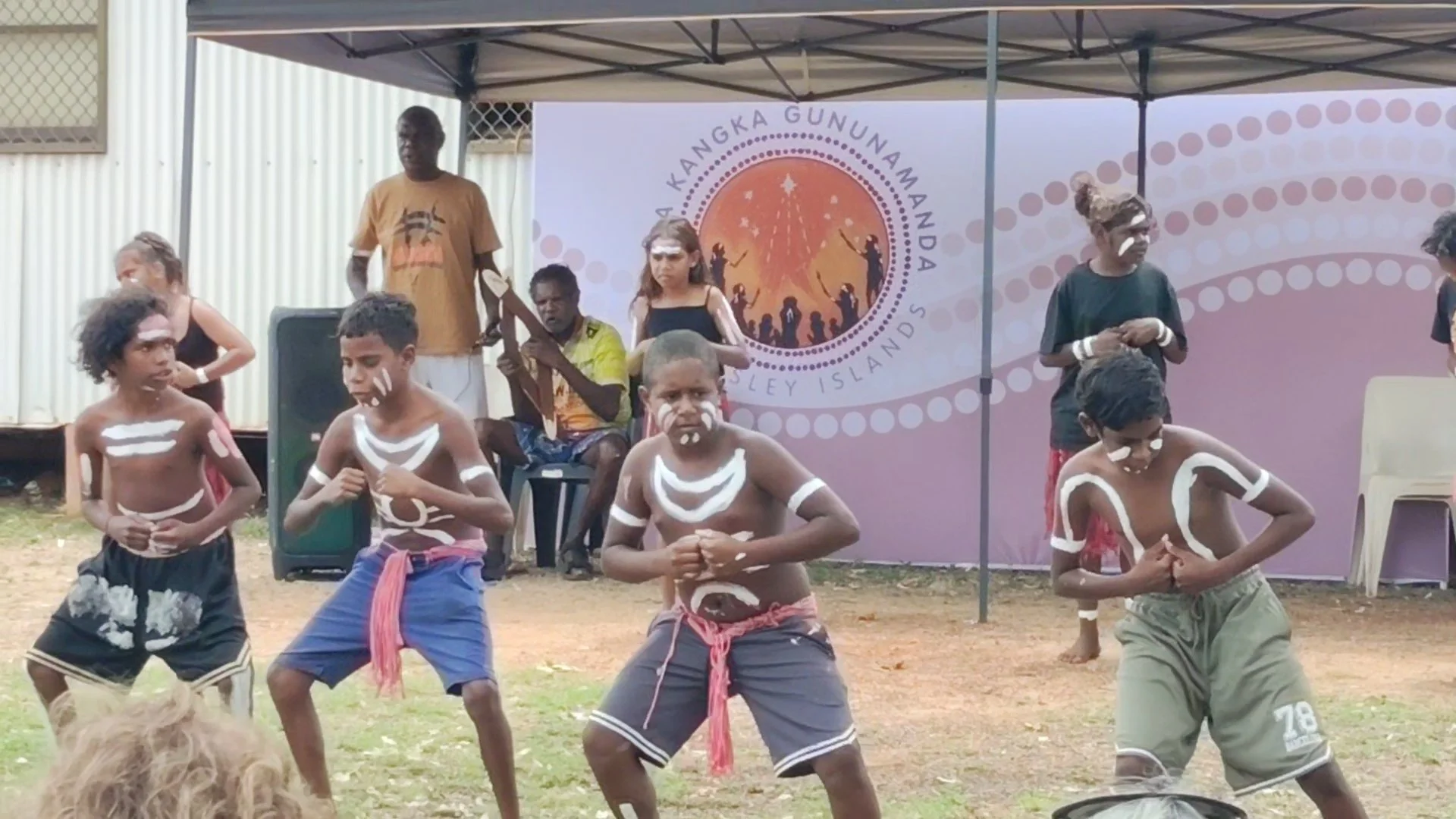
Jika Kangka Gununamanda (JKG) means 'plenty talk Mornington Island people', and the Lardil, Kaiadilt, and Yankaal peoples are making sure Community voices are heard.
Nestled in the Gulf of Carpentaria in Queensland, Mornington Island residents are driving positive change through JKG, who support the engagement and community leadership from all family and language groups. JKG also coordinates and manages the Thaldii Karrwa (stand up, strong) justice reinvestment initiative, bringing together stakeholders and ensuring Community is in the driver’s seat.
Community-led
Community-led means everyone has a say, is heard and understood, from family-to-family conversations, youth-to-youth, women-to-women, men-to-men, reinforcing Cultural protocols and respecting local ways of working.
Three advisory groups: Thawathu Men's, Warilda Yibibi / Kajbaal Women's and Junka Ngaluda Youth work on initiatives and input relevant to their group, shaping and defining their priorities. Within each of the three advisory groups are two representatives for portfolios of Health, Culture, Justice and Employment Education & Training. They meet with key services and stakeholders, keep their advisory group up-to-date and loop back feedback.
Those 24 people with portfolios form the Thaldii Karrwa Leadership Group, which oversee the Thadlii Karrwa initiative. There is also the JKG Board with membership of the local Aboriginal Community Controlled Organisations (ACCOs) in the Mornington Island Community.
The river….
Jika Kangka Gununamanda and Thaldii Karrwa governance groups are working with Kowa, identifying key outcomes and objectives of their work, and how to best measure impact. The project is following the course of the river, beginning upstream with deep listening and gathering, and flowing downstream into doing, sense-making and reflection.
Each rock represents a steady resting place of learning pools and flows onward. Along the banks, reeds and flowers show renewal, adaptability, and growth, the life that emerges when practice is nourished through collaboration.
The old tree stump reminds us that everything new grows from something deeply rooted, long-standing wisdom and the Cultural foundations that hold this work steady.
The journey is cyclical, not linear. As the waters return, they carry new insights and strength back to Community, continuing the flow of learning and self-determination. This co-partnership emphasises relational approaches that stay with and respect ‘the pace of Community’ and local protocols and being flexible to Community needs.
“The process contributes to genuine Community leadership from the grassroots, from across our clan groups and families. It provides information flow back to the Community about where things are up to and how this builds on previous work. It helps to build knowledge and show progress or change based on the contributions of the Community. This builds the movement and genuine involvement of our people in the work.” JKG Executive Officer Melanie AhKit
By us, for us
Jika Kangka Gununamanda is measuring and showcasing success to influence and advocate for improved services and responses to better meet the Community needs and align with the Community’s self-determined aspirations.
“These Cultural ways make us stronger, and we know that our Community feels safe and respected, engaging in this way. The work is done by us, for us. This contributes to self-determination in that Community members see our own people leading this work at each stage. It makes us feel stronger seeing that we are leading this work, not outside people. It is our Community leading, from deciding what needs to be done, to how the yarning is done and concepts explained, to interpreting and using the information, and how it is shared back. It means the story comes from the heart. It is part of truth-telling. Our lived experience is centred in all steps.” - JKG Executive Officer
The data story
Community are strengthening their knowledge around Indigenous Data rights and how to measure change that is meaningful to community. The Thaldii Karrwa governance groups want the right stories to be told by the right people, in the right way for the Mornington Island Community, (the data story).
“Data is more than information – it’s our story, our truth, and our responsibility. We collect and share it the right way – through trust, permission and respect.” Women’s Advisory Group
“We’ve got good ideas, and we want to be heard. We just need a safe space to share it. We’re ready to step up and to the work for our community.”
Youth Advisory Group.
“We want to keep our story in our hands. Data is part of our truth, our story, our knowledge, our way.”
Men’s Advisory Group
Aboriginal Matriarchs building strong Communities in the Kimberly

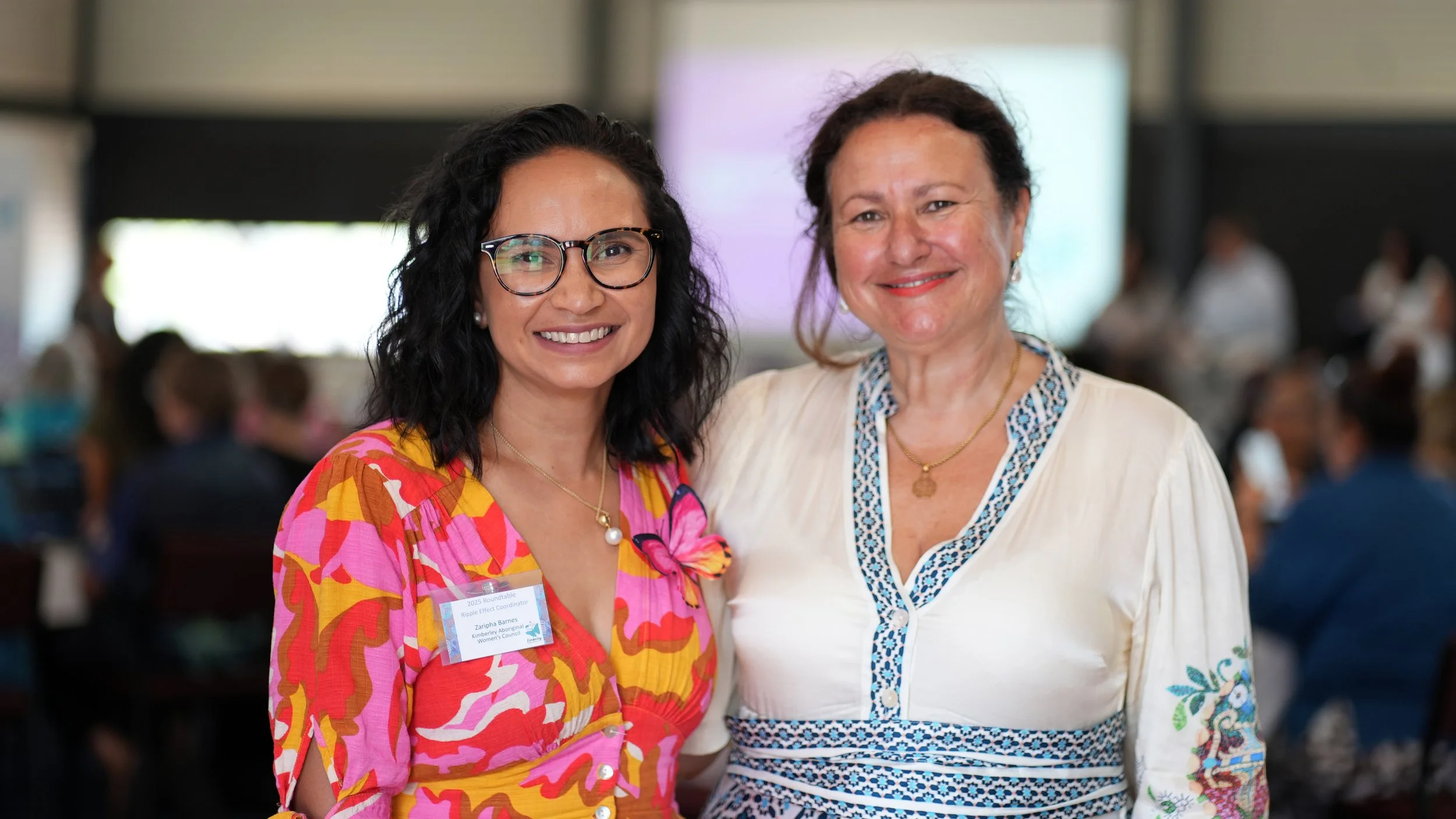
A powerful Aboriginal Women’s Council in the Kimberly is ensuring Aboriginal women are being heard and play a critical role in Community leadership and positive change.
More than 32 Aboriginal language groups make up the Kimberly in Western Australia, almost the same size as the state of Victoria. Such a vast area in land and diversity means every Community, town and family unit is unique. One size does not fit all, with place-based solutions needed to place-based issues.
The Kimberley Aboriginal Women’s Council (KAWC) was born from gatherings and consultation over eight years. Momentum grew from the North-West Aboriginal Women’s Leadership Conference, with Community engagement, government and corporate support leading to further planning, regional leadership roundtables and foundational work.
Kimberly Aboriginal women want their voices heard, from culturally safe service delivery to tackling high youth incarceration rates and removal of young people into state care. The women particularly want to ensure children remain connected with family, Culture and Country. KAWC Board Member Jodie Bell, spoke to 3cr radio ‘Women on the line’ about the launch of their Strategic Plan to make lasting change.
“Women are the backbone of the family, they are the ones holding the family together, they are the primary care givers of our children and grandchildren.”
“How do we as women take back the power to be able to control and make the decisions that are impacting on the lives of our kids and ourselves.”
“We help empower Aboriginal women to be the best versions of themselves and give them a voice to address and problem solve the issues that are facing their local communities.”
The Kimberley Aboriginal Women’s Council is not a service delivery organisation. Their work centres on empowering Aboriginal women and amplifying their voices to influence systems, policy and community outcomes.
“Empowering women from a family level unit, we want to create the resilience and tools to be the leader of their family group, through to their extended family group, which will then ripple out to the community, and the region, and even nationally and internationally.” Board Member Jodie Bell.
Key areas of their goals include:
Rise and Shine: Empowering young women at school, in their career, training and leadership path.
Community Leadership: Empowering women who are already leaders in the family, Community or workforce and give them more skills to get outcomes they want.
System reform: Working with service providers to ensure women are co-designing with Kimberly people to create culturally safe service for people to access and work in.
Data sovereignty: Ensuring the collection of the right data and keeping Community, funders and government informed about how change is happening.
Creating change
By empowering local women and community groups, the KAWC aims for their work to be replicated at Community level. Aboriginal women will be empowering Aboriginal women in their homes, family and Community, lifting their voices and leadership.
Measuring impact through data collection and evaluation is often done through harmful western systems, by outsiders who have little to no connection with the Community.
Jodie says people are being asked sometimes complex questions in English, which is not their first language, and often statistics are used against Community who are portrayed in deficit ways.
“We want the right questions asked and we want to use information in a way to make our Community stronger.”
Kowa is walking alongside KAWC to elevate the women’s work to be more impactful and powerful and create positive changes in the family and Community.
“Usually, it’s our women that are in government services and service providers. How do we use our leadership and our skills to change the way service delivery is rolled out to our mob, that create change for our people.” KAWC Board Member Jodie Bell.
Support KAWC
“Building our matriarchs, they will then be empowered to make the change that needs to happen in you. We're about building the strength of the women and then they do the good work that they do.” Attribution here from video
To support the Kimberley Aboriginal Women’s Council contact info@kawc.org.au

AES 2025 International Evaluation Conference
How can the Australian evaluation sector move beyond the bubble?
That's the question posed to Kowa and other delegates at the recent International Evaluation Conference on Ngunnuwul Country…
How can the Australian evaluation sector move beyond the bubble?
That's the question posed to Kowa and other delegates at the recent International Evaluation Conference on Ngunnuwul Country.
What are our thoughts?
"The theme 'Beyond the Bubble' seeks to embrace diverse perspectives, engaging with different communities, and challenge individual assumptions to develop a more holistic and inclusive understanding of the world."
To be honest, Kowa would like to 'Burst the Bubble' of racist, colonial evaluation systems that harm, disrespect and disregard Mob. We want our communities, Blak organisations and Mob to design, lead, manage and protect their evaluation. We want non-First Nations evaluators to ensure First Nations' Communities shape their own futures and drive meaningful change.
Kowa CEO Skye Trudgett took conference delegates through what it means to turn the power of data and evaluation back into the hands of Communities. How Kowa is leading innovation and fighting back against the harmful legacy of surveillance and exploitation of data collection and evaluation. Our communities must determine what is important, what are the challenges, who are the people to help find solutions, using their systems, methods and tools.
This is not just about data. It's about deep knowing that comes over time. With more than 60 thousand years of knowledge, our communities have lived through cycles of change and challenges. They have adapted, evolved and kept communities strong and safe.
The Australian evaluation sector must not just move beyond the bubble, but reflect on their role in creating this bubble, that has excluded Mob and taken agency, and the harm this has caused. By doing this with deep reflections, they can give up their power and ensure the sector creates space, elevates and empowers First Nations' peoples.
About
The annual AES International Evaluation Conference brings together evaluators from around the world. Presentations include keynote addresses by well-known and thought-provoking national and international evaluators. The conference offers a mix of formal and interactive presentations, panel discussions and skill building workshops. Presentations cater for all levels, from evaluators just starting out to the very experienced.
AES 2026: Darwin 14–18 September.